

How Reading Habits Improve Academic and Communication Skills
How Reading Habits Improve Academic and Communication Skills
Ask a teacher which students tend to perform well across subjects and many will give a similar answer — students who read regularly. It is not necessarily those who read the most but those who make reading a consistent habit. Although this may seem simple, its impact is evident in classrooms. Reading shapes how children understand questions, write answers and communicate with others.
The benefits of reading habits extend well beyond enjoyment. Regular reading develops vocabulary, concentration and comprehension, all of which contribute to academic performance. It also helps children express themselves more clearly in both speech and writing. Even 20 minutes of reading a day can make a noticeable difference when practised consistently.
Why Do Reading Habits Matter So Much?
Reading is a habit that supports learning across almost every subject at school. Children who read regularly acquire new vocabulary, become familiar with sentence structures and learn to engage with ideas for extended periods. This ability to concentrate is particularly important in an environment where short videos and constant digital engagement can make sustained attention more challenging.
The good news is that developing this habit does not require elaborate resources. A book, a quiet space and a consistent routine are often sufficient.
How Does Reading Help with Academics?
The benefits of reading habits for students are particularly evident in academic performance, as reading supports learning across almost every subject.
• Better understanding of questions. Students sometimes lose marks not because they lack the knowledge but because they misinterpret the question. Regular reading helps them develop the ability to identify what a question is asking.
• Stronger writing skills. Children who read regularly become familiar with effective sentence construction and the flow of written language. As a result, their essays and long-form answers are often clearer and better organised.
• Support across subjects. Understanding mathematical word problems, reading passages in science and writing detailed answers in history all depend on strong reading comprehension.
• Improved concentration. Reading a chapter requires sustained attention and patience, both of which are essential for effective studying.
The ICSE curriculum places considerable emphasis on English proficiency and conceptual understanding, making reading an especially valuable habit for students following this board. Our previous blog post on the benefits of choosing an ICSE school in India explores this in greater detail.
How Does Reading Improve Communication Skills?
The words and expressions people use often come from what they read and hear. Children develop their communication skills in much the same way. Regular readers have a wider vocabulary to draw upon, allowing them to express their thoughts more precisely instead of relying on general phrases such as “it was nice” or “I don’t know.”
Stories also help children develop empathy and emotional understanding. By following characters through challenging situations, they learn to recognise different perspectives and understand how others may feel. These abilities are valuable in conversations, group activities and friendships, where listening is just as important as speaking.
Another one of the benefits of reading habits that parents may notice over time is increased confidence. Children who are familiar with a topic are often more willing to participate in classroom discussions and express their opinions. Activities such as debates and elocution further strengthen these communication skills by providing opportunities to put their knowledge and vocabulary into practice.
How Can You Build a Reading Habit at Home?
If your child does not read regularly, there is no need to be concerned. Developing a reading habit can begin with a few simple changes at home. The following ways to improve reading habits can help make reading a natural part of a child’s daily routine.
• Allow children to choose their reading material. Comics, sports stories and other age-appropriate books can all encourage reading. Introducing books that are too advanced or do not interest a child may discourage the habit.
• Set aside a fixed time for reading. Fifteen to twenty minutes before bedtime works well for many families. Maintaining a consistent schedule is often more effective than focusing on the amount of time spent reading.
• Set an example by reading yourself. Children often learn through observation. When parents make reading part of their own routine, they demonstrate its value more effectively than through instructions alone.
• Read aloud to younger children. Reading aloud remains beneficial even after children learn to read independently. It also provides an opportunity for parents and children to spend meaningful time together.
• Keep books easily accessible. A small bookshelf at home, a book in a school bag or one kept in the car can make it easier for children to read whenever they have time.
• Discuss books without turning the conversation into a test. Ask children about what they have read, what they found interesting or how they would have responded to a particular situation. These informal conversations can strengthen comprehension and critical thinking.
• Visit a library together. Occasional library visits can help children discover new books and develop a positive association with reading.
Does Reading Replace Hands-On Learning?
Reading does not replace hands-on learning. Both approaches complement each other and can produce better learning outcomes when used together. For example, a child who reads about how plants grow and then plants a seed is likely to develop a more meaningful understanding of the process than a child who relies on only one of these experiences.
What If Screens Keep Winning?
Children may initially find screens more appealing than books because digital entertainment is readily accessible and engaging. Instead of imposing a complete ban on screens, parents can establish screen-free periods during reading time and encourage children to choose books that genuinely interest them.
Audiobooks and e-books are also useful alternatives, particularly for children who are less comfortable with printed books. Printed books can be helpful for practising sustained attention so a balanced approach that includes both print and digital formats can be beneficial.
Conclusion
Reading does more than help children perform well in examinations. It enables them to understand questions more accurately, express their thoughts clearly and communicate with confidence. It also develops the patience and concentration required for effective learning. Building this habit does not require a significant daily commitment. Consistency, access to suitable books and the freedom to choose reading material can make a meaningful difference.
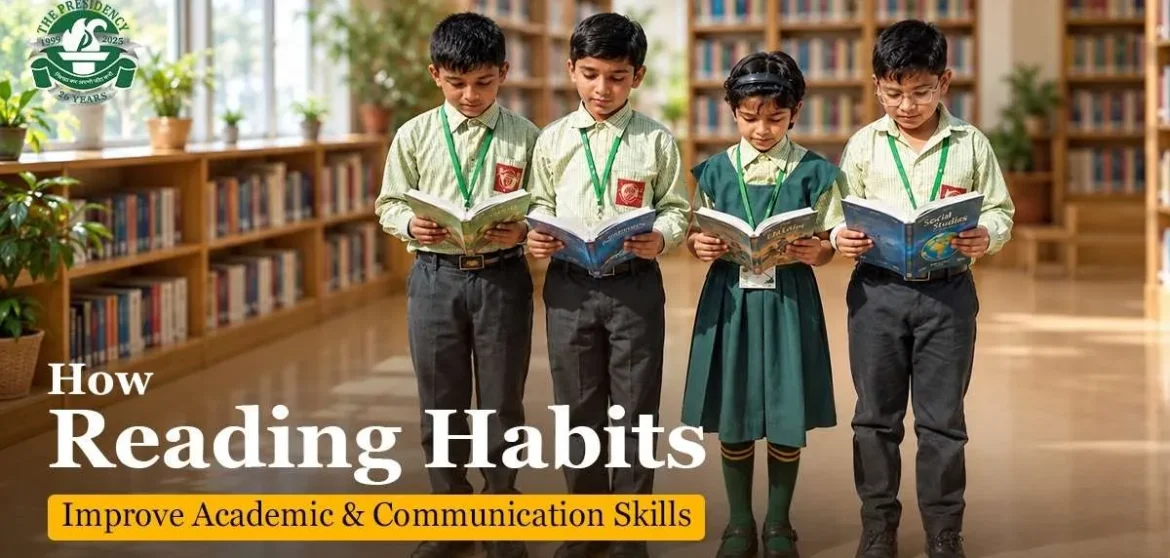
At The Presidency International School, we consider reading an integral part of everyday school life. As an ICSE school in Bhaniyawala, Dehradun, we recognise that the board’s emphasis on English proficiency and conceptual understanding aligns naturally with the development of strong reading habits. Our air-conditioned, well-stocked library offers books across a range of subjects for both students and teachers.
Reading also complements the school’s wider range of activities. House activities such as elocution, debates, quizzes and dramatics provide students with opportunities to apply the vocabulary and knowledge they acquire through reading. Our literary magazine allows students to develop their writing skills and see their work published. Our teachers strive to understand each student’s individual needs and encourage those who require additional guidance in developing an interest in books.
Younger children can begin building these habits through our Maple Bear Canadian pre-school and continue developing them throughout their school years, up to Class XII. To learn more about our approach to education, you are welcome to visit our campus or explore our admission procedure.