
Creative Diwali Craft Ideas That Help Children Learn New Skills
Creative Diwali Craft Ideas That Help Children Learn New Skills
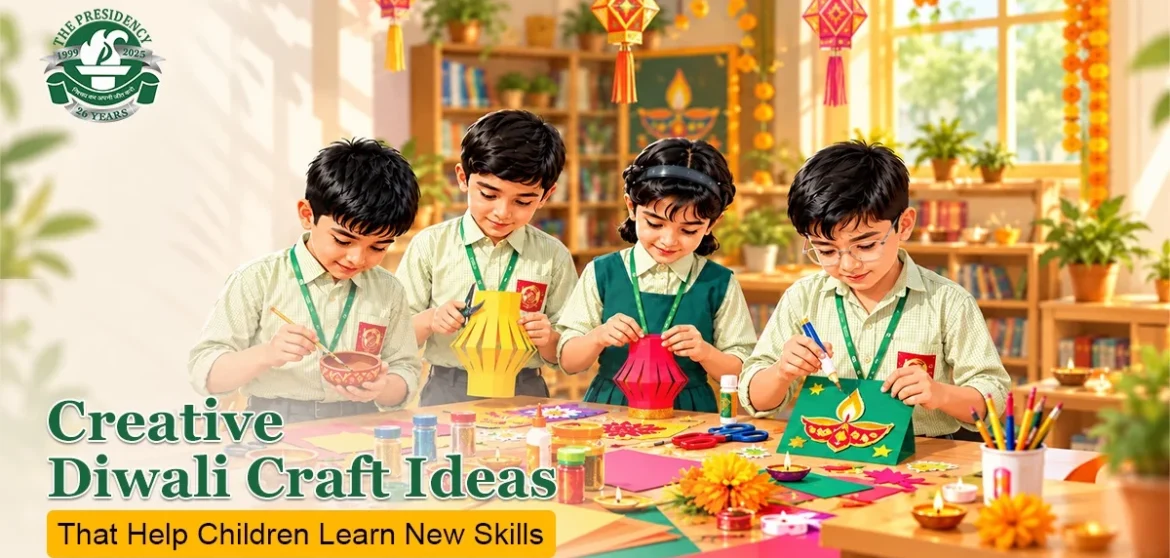
Diwali is a festival that brings families and communities together through lights, decorations and celebrations. It also offers children an opportunity to explore their creativity and learn through hands-on activities. Some of the most useful Diwali craft ideas for kids include making paper lanterns, decorating diyas, creating rangoli designs, preparing festive greeting cards and designing decorative torans. These simple activities allow children to develop fine motor skills, improve concentration, understand colours and shapes and learn the importance of patience and creativity.
Rather than limiting Diwali celebrations to sweets and decorations, parents and teachers can introduce different Diwali craft ideas for kids to make festive celebrations more meaningful. With a few everyday materials and some guidance, children can create beautiful decorations while learning skills that support their overall development.
Why Are Diwali Craft Activities Important for Children’s Development?
Craft activities are more than just a way to keep children occupied during the festive season. They give children an opportunity to use their imagination, make independent decisions and learn by doing.
When children cut paper, paint it and other objects with different colours or put different materials together, they develop several important skills such as
• Fine motor skills — Activities such as cutting, folding, painting and pasting help strengthen the small muscles in children’s hands and fingers.
• Creativity and imagination — Children learn to experiment with different colours, patterns and designs instead of following a single approach.
• Concentration and patience — Completing a craft project requires children to pay attention to small details and follow instructions.
• Problem-solving abilities — Children learn to find solutions when something does not fit, a design does not work or they need to change their approach.
• Confidence and independence — Completing something on their own gives children a sense of achievement and encourages them to try new activities.
These benefits make festive craft sessions a valuable addition to both classroom learning and activities at home.
7 Creative Diwali Craft Ideas That Help Children Learn New Skills
Children of different age groups can enjoy making festive decorations. The key is to choose activities that match their abilities and allow them to participate actively rather than simply watching an adult complete the work.
Here are seven simple and engaging activities that parents and teachers can introduce during Diwali.
Decorate Diyas with Colours and Patterns
Decorating clay diyas is one of the most familiar festive activities. Children can use non-toxic paints, brushes and decorative materials to create their own designs.
Encourage them to experiment with different colour combinations, dots, lines and simple patterns. Younger children can begin with basic painting, while older students can try more detailed designs.
Skills children develop:
• Colour recognition and coordination.
• Hand-eye coordination through painting.
• Creativity and attention to detail.
• Patience while completing a design.
Parents should ensure that children use unlit diyas during the activity. Lighting them should always be handled by an adult.
Make Colourful Paper Lanterns
Paper lanterns are an excellent way to introduce children to basic shapes, folding and construction. They can be made using coloured sheets, scissors, glue and decorative materials.
Children can fold the paper, make simple cuts and join the edges to form a lantern. They can then decorate it with stars, patterns or paper strips.
Skills children develop:
• Understanding of shapes and patterns.
• Basic measurement and spatial awareness.
• Following instructions in a sequence.
• Hand coordination and problem-solving.
Teachers can also explain how different shapes and folds help create a three-dimensional object, making this activity a simple introduction to practical learning.
Create Festive Greeting Cards
Making handmade Diwali cards allows children to express their thoughts and creativity. They can use coloured paper, crayons, stickers and simple drawings to prepare cards for family members, friends and teachers.
Children can also write short festive messages inside their cards. This makes the activity useful for language development as well as art.
Skills children develop:
• Writing and vocabulary.
• Creative expression.
• Communication and emotional expression.
• Fine motor skills through drawing and pasting.
It also helps children understand the value of personal gestures and thoughtful communication.
Design a Paper Rangoli
Rangoli is an important part of Diwali decorations and children can explore this tradition through a paper-based activity. Instead of using loose colours or powders, they can create rangoli designs using coloured paper, cut-outs, shapes and decorative stickers.
Teachers can introduce simple symmetrical patterns and encourage children to repeat shapes or arrange colours in different ways.
Skills children develop:
• Understanding of symmetry and patterns.
• Colour identification.
• Mathematical thinking.
• Focus and visual coordination.
This activity also introduces children to a traditional Indian art form in an age-appropriate manner.
Prepare Decorative Paper Torans
A toran is traditionally placed at the entrance of a home during festivals. Children can make their own versions using coloured paper, leaves, flower-shaped cut-outs and thread.
They can arrange the decorative pieces in a particular sequence and join them to create a hanging decoration.
Skills children develop:
• Pattern recognition and sequencing.
• Basic counting.
• Hand-eye coordination.
• Understanding of traditional decorations.
For younger children, teachers can prepare the cut-outs in advance so they can focus on arranging and decorating them.
Make Diwali-Themed Bookmarks
A festive bookmark is a simple craft project that also encourages children to develop an interest in reading. Children can cut thick paper into bookmark-sized strips and decorate them with lamps, stars, flowers and other Diwali-related illustrations.
They can also write a short festive message or a few lines about the importance of Diwali.
Skills children develop:
• Drawing and creative expression.
• Writing and vocabulary.
• Basic measurement and cutting.
• Interest in reading and books.
It is a useful activity for combining art with language learning.
Create a Recycled Diwali Decoration
Diwali decorations can also be made using materials that are already available at home or in the classroom. Empty cardboard rolls, old newspapers, unused paper, cardboard boxes and leftover decorative materials can be turned into festive items.
Children can use these materials to create small decorative hangings, paper flowers or festive wall displays with adult guidance.
Skills children develop:
• Resourcefulness and problem-solving.
• Environmental awareness.
• Creative thinking.
• Planning and independent decision-making.
This activity helps children understand that attractive decorations do not always require expensive materials. Reusing everyday items can be equally creative and useful.
How Can Parents and Teachers Make These Activities More Meaningful?
The learning value of a craft activity depends largely on how children are encouraged to participate. Instead of focusing only on the final decoration, adults should give children enough time to understand the process and complete their work.
A few simple practices can make these activities more effective:
• Allow children to make their own choices. Let them select colours, patterns and decorative elements instead of deciding every detail for them.
• Encourage participation at every stage. Children should be involved in arranging, painting, folding and decorating wherever their age and abilities allow.
• Connect crafts with learning. Introduce basic concepts such as counting, shapes, colours and symmetry during the activity.
• Appreciate individual efforts. Every child has a different way of expressing creativity. Encourage their effort rather than comparing their work with others.
• Prioritise safety. Use child-friendly scissors, non-toxic colours and age-appropriate materials. Keep sharp tools, hot glue guns, candles and electrical decorations away from young children.
When planned thoughtfully, these activities can make festive celebrations a valuable part of children’s learning experience.
How Do School Activities Support Learning Beyond the Classroom?
Schools play an important role in providing children with opportunities to explore their interests beyond regular academic lessons. Activities involving art, craft and cultural celebrations allow students to apply what they learn in different ways. Diwali crafts for school students, for instance, can combine creative expression with practical learning, giving children an opportunity to understand traditional art forms, work with different materials and develop new skills.
For example, a classroom Diwali craft session can become an opportunity for students to work together, exchange ideas and learn about Indian traditions. Such experiences help children develop social skills, confidence and a better understanding of the world around them.
Conclusion
Diwali craft activities give children an enjoyable way to explore their creativity while developing practical skills. Whether they are decorating diyas, making paper lanterns, designing rangoli or creating festive greeting cards, each activity introduces them to new ways of thinking and learning. More importantly, these experiences teach children to be patient, independent and confident in their abilities.
At The Presidency International School, learning is viewed as an experience that extends beyond textbooks and classroom lessons. That’s why we encourage students to participate in academic activities, art programmes, cultural celebrations and other opportunities that support their intellectual, creative, social and emotional development. Our Maple Bear Canadian Preschool programme also follows a research-based approach to early childhood education with an emphasis on building curiosity and a positive attitude towards learning.
Through such opportunities, we aim to create an environment where children are encouraged to explore their interests, discover their abilities and develop skills that remain valuable throughout their lives.